

B2B Lead Generation: A Complete Strategy to Find, Reach, and Convert High-Quality Business Leads
B2B lead generation is the process of identifying businesses that could benefit from your product or service, finding the right people within those businesses, and starting conversations that may eventually turn into customers.
By Outbound Alloy · Updated
# B2B Lead Generation: A Complete Strategy to Find, Reach, and Convert High-Quality Business Leads
Finding potential customers is one of the biggest challenges for businesses selling products or services to other businesses. You may have a valuable product, an experienced team, and a competitive offer, but without a consistent way to reach the right decision-makers, growing your customer base can become difficult.
This is where B2B lead generation comes in.
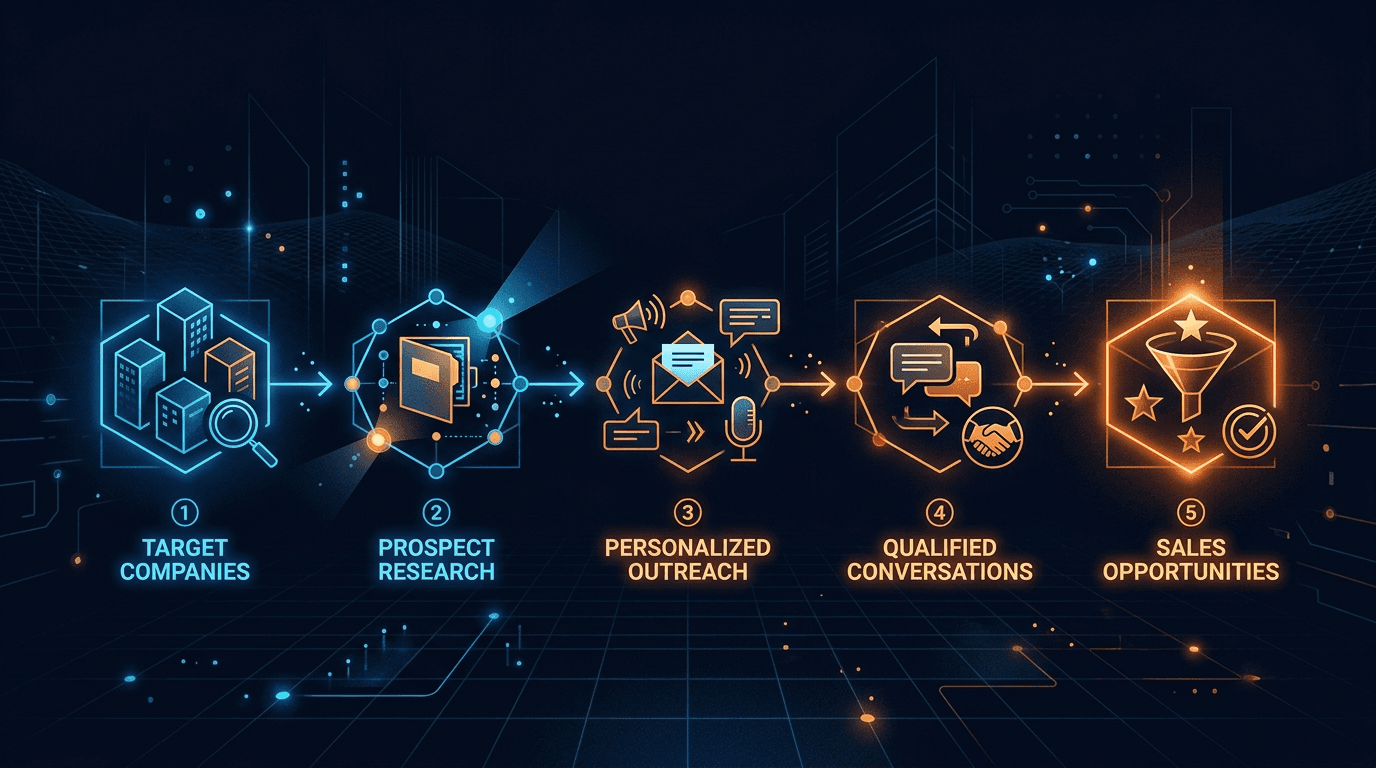
B2B lead generation is the process of identifying businesses that could benefit from your product or service, finding the right people within those businesses, and starting conversations that may eventually turn into customers.
However, successful lead generation involves much more than collecting email addresses or sending hundreds of sales messages. It requires a clear understanding of your target market, accurate prospect data, relevant messaging, a suitable outreach strategy, and a reliable follow-up process.
In this guide, we will explain how B2B lead generation works, how to build a practical strategy, which methods businesses can use, and how to measure whether their efforts are producing meaningful opportunities.
What Is B2B Lead Generation?
B2B stands for business-to-business. It describes companies that sell products or services to other businesses rather than directly to individual consumers.
For example:
- A software company selling a subscription platform to other businesses.
- A marketing agency offering services to growing companies.
- A logistics provider working with manufacturers and distributors.
- An IT consultancy helping organizations manage their technology.
- A recruitment agency finding employees for other companies.
B2B lead generation is the process of finding businesses that match your target customer profile and identifying the people who influence or make purchasing decisions.
A lead could be a business owner, founder, marketing director, sales manager, operations manager, or another professional who has a relevant business need.
The objective is to turn an unknown potential customer into a meaningful business conversation.
Why Is B2B Lead Generation Important?
A business cannot depend entirely on referrals, occasional website enquiries, or customers discovering its services by chance.
A structured lead generation strategy gives a company a repeatable way to identify potential customers and introduce its offer to them.
Here are some reasons businesses invest in B2B lead generation.
1. Reach the Right Decision-Makers
In many organizations, the person using a product is not necessarily the person responsible for purchasing it.
For example, when selling a CRM platform, the relevant contacts might include a sales director, head of sales, revenue operations manager, or company founder.
Identifying the right roles helps businesses avoid spending time contacting people who have little involvement in purchasing decisions.
2. Build a Consistent Prospecting Process
A structured process makes it easier to identify new prospects, organize outreach, track conversations, and follow up at the right time.
Instead of relying on occasional networking or referrals, businesses can develop a repeatable prospecting workflow.
3. Enter New Markets
Lead generation can help businesses reach companies in new industries, locations, and market segments.
A company operating in the United States, for example, may want to explore opportunities in the United Kingdom, Australia, or Canada.
Researching each market before launching outreach helps businesses understand its audience, terminology, and business requirements.
4. Improve Sales Team Productivity
Sales representatives can spend significant time researching companies and identifying relevant contacts.
A well-organized lead generation process gives sales teams better prospect information so they can focus more of their time on conversations and opportunities.
Step 1: Define Your Ideal Customer Profile (ICP)
Before collecting leads or launching an email campaign, you need to understand exactly which businesses you want to reach.
This is called an Ideal Customer Profile, commonly known as an ICP.
An ICP describes the type of company most likely to benefit from your product or service.
A useful ICP should include the following details:
| Factor | What to identify | |---|---| | Industry | Technology, healthcare, logistics, finance, manufacturing, etc. | | Company size | Employees, revenue range, or business scale | | Location | Countries, regions, or cities you serve | | Business model | SaaS, agency, manufacturer, distributor, etc. | | Business needs | Problems your product or service solves | | Buying roles | People responsible for evaluating or purchasing | | Exclusions | Businesses that are unlikely to be suitable customers |
Example of an ICP
Imagine a company offering outsourced accounting software to small and medium-sized businesses.
Its ICP might look like this:
- Industry: Professional services and consulting.
- Company size: 10–100 employees.
- Location: United States and United Kingdom.
- Business model: Established service-based businesses.
- Relevant roles: Founder, CEO, finance director, and operations manager.
- Potential problem: Managing financial records and reporting across a growing business.
This description gives the sales team a clear direction when researching prospects.
Why Targeting Everyone Is a Mistake
A common mistake is trying to sell to every company that might possibly need a service.
A message written for a small marketing agency may not be relevant to a large manufacturing company. Their priorities, challenges, and purchasing processes are different.
Start with a specific audience. Once you understand which segments produce relevant conversations, you can test additional markets.
Step 2: Research and Build a Targeted B2B Lead List
After defining your ICP, the next step is finding companies and contacts that match it.
This process is commonly called B2B prospect research or lead list building.
A useful lead record should contain more than just an email address.
Consider collecting:
- Company name.
- Company website.
- Industry.
- Company location.
- Approximate employee count, when available.
- Contact's full name.
- Job title.
- Professional email address.
- LinkedIn profile or another relevant professional source.
- A relevant company detail or reason for contacting them.
Where Can You Find B2B Prospects?
Several sources and platforms can help with business research.
Company websites: Useful for understanding what a business does, its products, services, team, and target market.
LinkedIn Sales Navigator: Helps research companies and professionals using filters such as industry, location, company size, and job title.
Apollo.io: Provides company and contact research features for prospecting.
Clay: Helps organize research workflows and enrich prospect information using connected data sources.
Industry directories: Useful for finding businesses within specific sectors.
Public business information: Company announcements, hiring pages, industry publications, and other public sources can help identify relevant business context.
These tools are research resources, not guarantees that every contact detail is correct.
Verify Your Prospect Data
Incorrect email addresses can create delivery problems and waste campaign resources.
Before launching outreach, check that:
- The company matches your ICP.
- The contact's job title is relevant.
- The email address is accurate and current.
- The business is still operating.
- The prospect has not previously opted out of your communications.
Email verification tools can help identify some invalid or risky addresses, but no verification service guarantees delivery or proves that a person wants to receive your message.
Good lead generation starts with accurate, relevant information.
Step 3: Choose the Right B2B Lead Generation Channels
There is no single lead generation method that works equally well for every business.
The right approach depends on your audience, offer, sales cycle, resources, and budget.
Here are some commonly used B2B lead generation channels.
1. Cold Email Outreach
Cold email is a form of direct outreach in which a business contacts a relevant professional with whom it has no previous email relationship.
A well-planned cold email introduces a relevant business problem, explains why the offer may be useful, and makes it easy for the recipient to respond.
For example, a software company might contact operations managers at businesses that match its customer profile to discuss a specific workflow problem.
A good cold email should:
- Have a clear and relevant subject line.
- Address the correct person.
- Explain why the message is relevant.
- Focus on a business problem rather than a long company introduction.
- Present a clear and realistic offer.
- Include a simple call to action.
- Identify the sender honestly.
- Provide an appropriate way to opt out.
Avoid generic templates that could be sent to any company in any industry.
The goal is to start a relevant conversation, not to pressure someone into buying immediately.
2. LinkedIn Outreach
LinkedIn can help businesses identify decision-makers, understand their professional backgrounds, and establish business connections.
A practical LinkedIn prospecting process might involve:
- Identifying companies that match your ICP.
- Finding relevant professionals within those companies.
- Reviewing their roles and business responsibilities.
- Sending a personalized connection request where appropriate.
- Starting a relevant conversation after connecting.
Avoid sending identical promotional messages to large numbers of people. Relevant communication is more likely to lead to a useful discussion.
3. Search Engine Optimization (SEO)
SEO helps businesses attract people who are already searching for products, services, or information related to their needs.
For example, someone searching for "B2B lead generation agency" may be actively comparing service providers.
A good SEO strategy includes:
- Useful service pages.
- Relevant blog articles.
- Technical website optimization.
- Clear page titles and descriptions.
- Internal links.
- Helpful FAQs.
- A simple contact process.
Unlike direct outreach, SEO generally takes time to produce meaningful organic search visibility. It can become a valuable source of inbound enquiries as your website builds relevant content and authority.
4. Content Marketing
Content marketing involves publishing information that helps your target audience understand a problem and evaluate possible solutions.
Examples include:
- Practical industry guides.
- Detailed how-to articles.
- Research reports.
- Case studies based on genuine client work.
- Webinars.
- Educational videos.
- Industry-specific resources.
Useful content can help establish credibility before a potential customer contacts your business.
5. Paid Advertising
Businesses can use platforms such as Google Ads and LinkedIn Ads to reach specific audiences.
Google Ads can target people searching for relevant services, while LinkedIn Ads offers professional audience targeting.
Paid advertising can produce traffic more quickly than SEO, but it requires careful budgeting, audience selection, landing-page optimization, and conversion tracking.
Step 4: Create a Clear and Relevant Offer
Finding the right prospect is only one part of lead generation.
You also need to give that prospect a reason to pay attention.
Your offer should explain what you provide, who benefits from it, and what problem you help solve.
For example, compare these two messages:
Generic offer:
"We provide professional business solutions to help companies grow. Contact us today to learn more."
More relevant offer:
"We help growing SaaS companies identify relevant decision-makers and manage personalized outbound email campaigns to start conversations with potential customers."
The second example explains the audience, service, and intended outcome more clearly.
Focus on the Customer's Problem
Before writing your offer, ask:
- What problem does the target company face?
- Why might that problem matter to them?
- What makes your service relevant?
- What can you realistically deliver?
- What would make it easy for them to take the next step?
Avoid promising a specific number of leads, meetings, or sales unless you have reliable evidence and can support that commitment.
Clear expectations build more trust than unrealistic guarantees.
Step 5: Write Cold Emails That Start Business Conversations
A cold email does not need to be long.
In fact, a short message with a relevant reason for contacting someone can be easier to understand and respond to.
A practical cold email structure includes four elements.
1. Subject Line
Keep the subject line clear and relevant.
Examples:
- Question about your sales process
- Reaching more SaaS companies
- A thought on your outbound strategy
- Exploring potential opportunities
Avoid misleading subject lines that pretend you already know the recipient or have an existing relationship.
2. Opening Line
Explain why you are contacting that particular person or company.
Example:
"I noticed your team works with growing technology companies, so I wanted to ask about your current approach to finding new business opportunities."
Only reference details you have actually checked.
3. Value Proposition
Briefly explain how your service relates to their business.
Example:
"We help B2B companies research relevant prospects and manage targeted email outreach to start conversations with potential customers."
Keep the explanation focused on the recipient's needs.
4. Call to Action
End with a simple question.
Example:
"Would you be open to a short conversation about your current approach?"
The recipient should understand what you are asking without having to read a lengthy sales pitch.
Step 6: Build a Thoughtful Follow-Up Strategy
Many prospects will not respond to the first message.
They may be busy, reviewing other priorities, or simply have missed the email.
A relevant follow-up can give them another opportunity to respond.
A simple sequence could look like this:
| Timing | Purpose | |---|---| | Day 1 | Introduce your service and explain its relevance | | Day 4 | Briefly follow up on the original message | | Day 8 | Add a useful point or clarify the offer | | Day 13 | Send a polite final follow-up |
This is an example schedule, not a universal rule. Adjust it to the audience, channel, and applicable communication requirements.
What Should a Follow-Up Include?
A useful follow-up should:
- Refer to the original message.
- Stay brief.
- Avoid repeating the entire sales pitch.
- Add context if there is something useful to say.
- Respect negative responses and opt-out requests.
If someone asks you to stop contacting them, honor that request promptly across the relevant campaigns.
More follow-ups do not automatically mean more opportunities. The quality and relevance of the communication matter.
Step 7: Set Up Email Infrastructure Before Launching Campaigns
For companies using cold email, email infrastructure is an important part of campaign preparation.
Poor configuration can cause authentication failures, delivery problems, and damage to sender reputation.
Before launching an email outreach campaign, review the following.
SPF
Sender Policy Framework (SPF) is an email authentication mechanism that helps receiving servers check whether a sending service is authorized to send email for a domain.
DKIM
DomainKeys Identified Mail (DKIM) adds a digital signature to outgoing messages so receiving systems can verify that the message was signed by an authorized domain.
DMARC
Domain-based Message Authentication, Reporting, and Conformance (DMARC) tells receiving systems how to handle messages that fail SPF and DKIM alignment checks, according to the domain's policy.
Sending Domains and Mailboxes
Businesses should plan their sending infrastructure carefully.
This includes:
- Configuring domain authentication.
- Using legitimate and properly managed mailboxes.
- Monitoring sending reputation.
- Maintaining accurate recipient data.
- Avoiding sudden and excessive sending increases.
- Monitoring bounce and complaint rates.
- Honoring unsubscribe requests.
There is no universal sending volume that guarantees inbox placement. Safe sending practices depend on provider policies, domain history, recipient engagement, and the nature of the communication.
Also remember that technical authentication does not guarantee inbox placement. It is one part of a wider deliverability strategy.
Step 8: Follow Email Marketing and Privacy Requirements
B2B outreach is subject to legal and platform requirements. Sending business emails does not mean every contact can be approached without restrictions.
Requirements vary by country, recipient type, and communication method.
For example:
- United States: CAN-SPAM establishes requirements for commercial email, including accurate sender information, non-deceptive subject lines, a valid postal address, and a working opt-out mechanism.
- United Kingdom: PECR and UK GDPR may apply to electronic marketing, depending on whether the recipient is a corporate subscriber, an individual subscriber, or a named person whose personal data is being processed.
- Australia: The Spam Act 2003 sets requirements around consent, sender identification, and unsubscribe facilities.
- Canada: CASL generally requires consent for commercial electronic messages, subject to specific rules and exceptions.
Before launching campaigns, research the rules that apply to your recipients and business. Do not assume that a publicly available email address automatically means consent to receive marketing messages.
A responsible outreach process should include:
- Clear sender identification.
- Accurate business information.
- Appropriate legal basis or consent where required.
- A functional unsubscribe method.
- A suppression list for people who opt out.
- Secure handling of prospect information.
- Respect for applicable platform terms and privacy laws.
For complex campaigns, seek advice from a qualified legal professional familiar with the relevant jurisdictions.
Step 9: Measure the Metrics That Actually Matter
Sending more emails does not necessarily mean your lead generation strategy is improving.
You need to measure the quality of your targeting, communication, and resulting sales conversations.
Here are some important metrics to monitor.
| Metric | What it tells you | |---|---| | Data accuracy | Whether your prospect information is reliable | | Bounce rate | How many messages could not be delivered | | Reply rate | How many recipients responded | | Positive reply rate | How many responses showed genuine interest | | Qualified conversations | How many conversations match your target customer profile | | Meetings booked | How many relevant meetings were arranged | | Opportunity rate | How many conversations became genuine sales opportunities | | Customer conversion rate | How many opportunities became customers |
Do Not Depend Too Much on Open Rates
Email open tracking is increasingly unreliable because privacy features and automated image loading can register opens without a person actually reading the message.
Use open rates as limited context, not as your main measure of campaign success.
Positive responses, qualified conversations, sales opportunities, and customer outcomes provide more useful information.
Review Results by Audience Segment
Suppose you run two campaigns:
- Campaign A targets marketing agencies.
- Campaign B targets software companies.
If Campaign A produces more qualified conversations, that may indicate a stronger fit between your offer and that audience.
However, compare similar campaign conditions and enough data before making a decision.
Use the findings to refine your ICP, messaging, and prospect research.
Step 10: Turn Leads Into Customers With a Clear Sales Process
Generating a response is not the end of the lead generation process.
The next step is understanding the prospect's needs and deciding whether your business can genuinely help.
A practical sales process could include:
- Initial response: Reply to interested prospects promptly and professionally.
- Qualification: Understand their business, needs, budget, and decision-making process.
- Discovery conversation: Discuss their current challenges and desired outcomes.
- Solution proposal: Explain how your service addresses their specific requirements.
- Follow-up: Answer questions and clarify any concerns.
- Decision: Agree on the next steps if both sides see a suitable fit.
Not every interested prospect will become a customer. Some may have a different budget, an unsuitable requirement, or no immediate need.
A clear qualification process helps sales teams spend their time on the most relevant opportunities.
Common B2B Lead Generation Mistakes to Avoid
Even businesses with good products and experienced sales teams can struggle when their prospecting process has avoidable weaknesses.
Here are some common mistakes.
Targeting Too Many Industries at Once
Trying to reach every industry makes it difficult to create relevant messages.
Start with a focused audience and expand based on actual campaign feedback.
Using Unverified Contact Lists
Incorrect or outdated information can waste sending resources and create deliverability problems.
Research and verify contact information before launching outreach.
Sending Generic Messages
A message that does not explain why the recipient is relevant is easy to ignore.
Use accurate company and role information to make communication more specific.
Ignoring Follow-Ups
Some prospects need additional context or time before responding.
Use a reasonable follow-up schedule while respecting opt-outs and negative responses.
Measuring Only Email Activity
The number of messages sent is an activity metric, not proof of business growth.
Measure qualified conversations and the opportunities that result.
Ignoring the Sales Team's Feedback
If the sales team repeatedly receives unsuitable leads, the problem may be in the targeting criteria, messaging, or qualification process.
Use sales feedback to improve future campaigns.
Should You Manage B2B Lead Generation In-House or Hire an Agency?
This depends on your business size, available resources, expertise, and growth plans.
Both approaches can work.
Managing Lead Generation In-House
An internal team gives your business direct control over research, messaging, outreach, and reporting.
It may be suitable when:
- You have an experienced sales or marketing team.
- You have the resources to manage prospect research.
- You want direct control over daily campaign operations.
- You can invest in the required tools and infrastructure.
However, building an internal process requires time, training, software, and ongoing management.
Working With a B2B Lead Generation Agency
An external agency can help businesses manage specific parts of the prospecting process or coordinate an entire outbound campaign.
Depending on the agency's services, this may include:
- Ideal customer profile research.
- Target account identification.
- Prospect list building.
- Contact research and verification.
- Cold email strategy.
- Campaign copywriting.
- Email infrastructure preparation.
- Campaign management.
- Reply monitoring.
- Reporting and performance analysis.
When evaluating an agency, ask how it researches prospects, manages deliverability, handles opt-outs, reports results, and defines qualified leads.
Do not choose a provider based solely on promises of a large number of leads or meetings. Look for a process that fits your actual business goals.
How Outbound Alloy Helps Businesses With B2B Lead Generation
Building a reliable outbound process takes planning, research, and consistent campaign management.
Outbound Alloy helps businesses approach B2B prospecting through targeted research, personalized email outreach, and structured outbound campaign support.
Our services are designed around the requirements of each campaign rather than sending the same generic message to every audience.
Depending on the agreed campaign scope, our work can include:
Targeted B2B Lead Research
We identify companies and relevant professional contacts based on your industry, ideal customer profile, target location, and business requirements.
Prospect List Building
We organize prospect information into structured lists to support targeted outreach and sales prospecting.
Cold Email Campaign Management
We help plan and manage email outreach campaigns with relevant messaging, campaign organization, and follow-up processes.
Email Infrastructure Setup
We help prepare the technical email setup required for outbound campaigns, including domain authentication and mailbox configuration where included in the agreed scope.
Campaign Monitoring
We review campaign activity, responses, and relevant performance indicators to identify areas that may need improvement.
Our approach starts with understanding your business, your target customers, and the type of conversations you want to generate.
If you are exploring ways to improve your B2B prospecting process, you can contact Outbound Alloy to discuss your requirements.
Frequently Asked Questions About B2B Lead Generation
What is the best B2B lead generation strategy?
There is no single best strategy for every business. A good approach combines a clearly defined ideal customer profile, accurate prospect research, relevant messaging, suitable outreach channels, and consistent performance measurement.
How do B2B companies generate leads?
B2B companies generate leads through cold email, LinkedIn outreach, SEO, content marketing, paid advertising, industry events, partnerships, referrals, and other prospecting activities.
What is the difference between B2B lead generation and B2C lead generation?
B2B lead generation focuses on identifying and reaching businesses and their decision-makers. B2C lead generation focuses on finding individual consumers who may be interested in a product or service.
B2B purchasing decisions often involve multiple people, longer evaluation periods, and more detailed requirements.
Is cold email effective for B2B lead generation?
Cold email can be a useful B2B prospecting channel when businesses target relevant contacts, provide a clear reason for reaching out, maintain good data quality, and follow applicable email marketing requirements. Results depend on the audience, offer, message, and execution.
How do I find B2B leads for my business?
Start by defining your ideal customer profile. Then research suitable companies, identify relevant decision-makers, collect accurate professional contact information, and organize prospects into targeted segments.
What information should a B2B lead list contain?
A useful list may include company name, website, industry, location, contact name, job title, professional email address, and relevant research notes. Only collect information that is appropriate and necessary for your intended use.
How much does B2B lead generation cost?
Costs vary depending on the target market, number of prospects, research requirements, outreach channels, campaign complexity, and whether the work is handled internally or by an external agency. Request a scope-based proposal rather than comparing providers only by the number of contacts supplied.
How long does B2B lead generation take?
The timeline depends on the sales cycle, audience, campaign preparation, and outreach method. Research and infrastructure preparation take time, and meaningful results require ongoing review. There is no guaranteed timeline for generating qualified opportunities.
Should I hire a B2B lead generation agency?
An agency may be useful if your business lacks the time, expertise, or internal resources to manage prospect research and outbound campaigns. Before hiring one, review its process, communication, data practices, deliverables, and reporting methods.
What is the difference between a lead and a qualified lead?
A lead is a potential customer who has been identified as someone who may be interested in your offering. A qualified lead has been assessed against relevant criteria, such as business fit, role, need, and potential buying readiness.
Final Thoughts
Successful B2B lead generation starts with knowing exactly who you want to reach and why your offer matters to them.
Accurate research, focused targeting, relevant communication, reliable infrastructure, and a clear sales process all contribute to better prospecting.
Rather than focusing only on the number of emails sent or contacts collected, measure whether your activities are creating relevant conversations and genuine business opportunities.
If your business wants a more organized approach to prospect research and outbound email campaigns, Outbound Alloy can help you plan and manage the process.
Discuss your B2B lead generation requirements with Outbound Alloy.
About Outbound Alloy
Outbound Alloy helps businesses with B2B prospect research, targeted lead generation, cold email outreach, and outbound campaign support. Our focus is on helping companies reach relevant business contacts through organized research and thoughtful communication.
Want this applied to your outbound?
Tell us who you sell to and we will map a focused, responsible outbound system around it.